

Canteen and Dining Chairs: Hard Wearing Seats for the Hungriest Room
The canteen is the hardest room in the building on a chair. Nobody sits in one for eight hours, but everybody sits in one, and they drag it, tip it, spill on it and stack it against the wall for the quiz night. So the canteen chairs I rate are not the comfortable ones. They are the ones still standing in five years, still wiping clean, and still cheap enough that losing one to a leaving do is not a tragedy.
Here is how I pick them, and what we stock in the canteen and dining chairs range.
Wipe-clean beats everything
A canteen chair meets soup, coffee and the odd sauce sachet every working day. Fabric holds all of that. Polypropylene does not. One piece of moulded plastic with no seams, no stitching and no foam is the material that survives a lunch rush, and it is why the two chairs I send most people to are made of it.
The Nest Edge stacking canteen chair is the one I would put in most canteens. Polypropylene seat and back, a 150kg weight rating, stackable, and a choice of white, grey, green or red with or without arms. It runs from £49 to £58 ex VAT with a five year guarantee on the mechanical parts. Its sibling, the Nest Loop, has the same seat height and a rounder back in white, grey or blue for £49 to £53. Between them they do almost every canteen I am asked about.
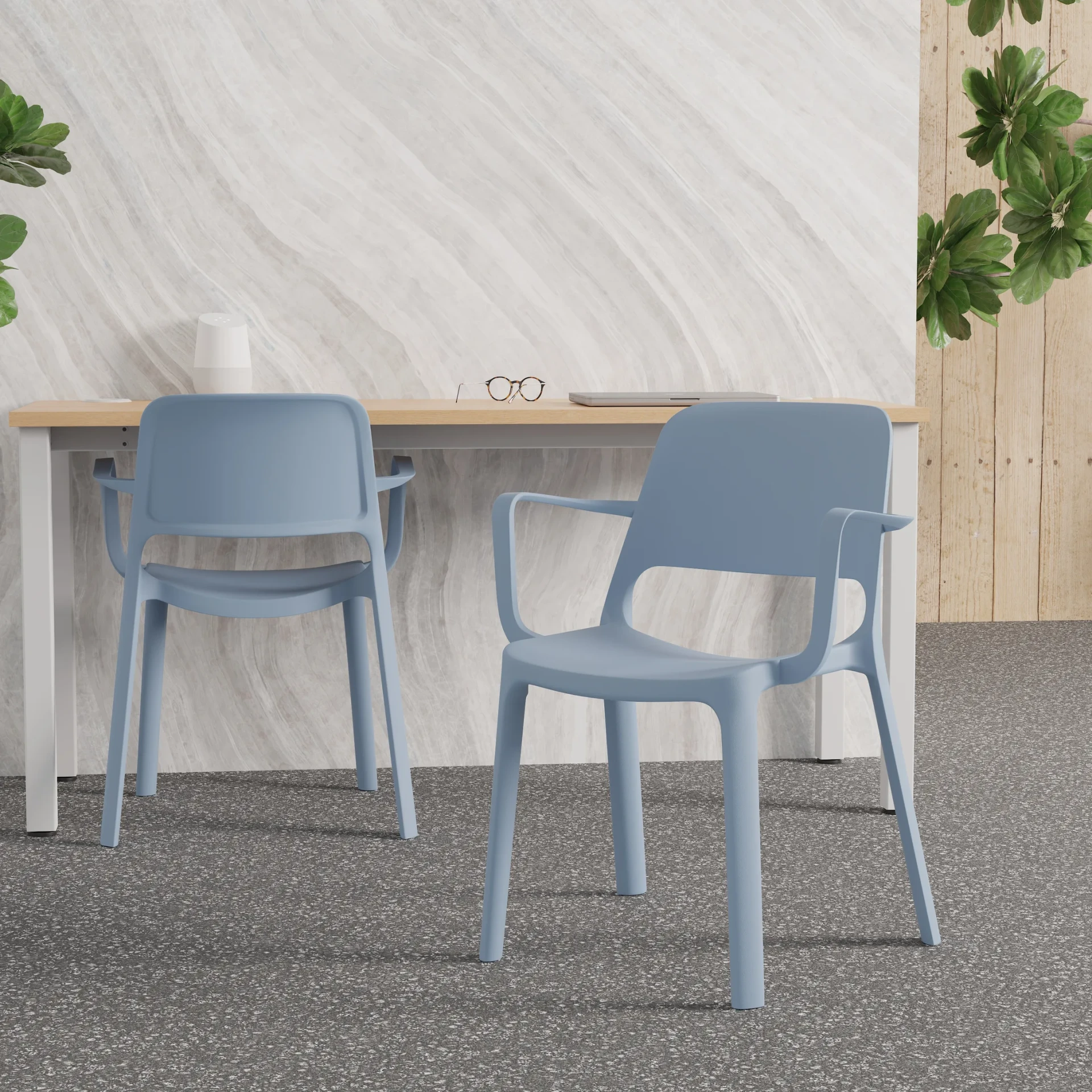
Stacking is a floor space decision
A canteen is a meeting room on Tuesday, a training room on Wednesday and a party on Friday. If the chairs cannot stack, that room does one job. The Nest chairs stack, and at around five kilos each they stack without anyone booking a physio afterwards. If you have twenty or more, a chair trolley from our chair parts and accessories pays for itself the first time someone has to clear the room.
The things I check before I recommend a stacker:
Weight per chair. Anything over six kilos gets stacked once and then left where it lands.
Feet. Plastic glides on a hard floor, or the floor pays for it.
Arms. They look nicer, they stack taller, and they make the chair wider at the table. Pick the armless version if the tables are tight.
Seat height has to match the table
This is the one people get wrong. A standard dining table is about 75cm high and wants a seat around 45cm, which is exactly where the Nest chairs sit at 44.5 and 45cm. Put those chairs at a poseur table and everyone is eating at chin height.
For a poseur or bar height table you want a stool with a seat around 64 to 65cm, which is what the Brayford and Charford stools give you. The Stowe is the odd one out at 46.5cm, so it belongs at a normal table with a bit of extra style. Measure the table before you order, not after.
A canteen chair is not bought for comfort. It is bought for the five hundredth wipe-down.
When to spend more
There is a case for a softer chair, and it is the breakout corner rather than the main run. The Marlow deep seat bistro chair is PU leather in forest green or pewter grey, wipes down almost as easily as plastic, and at £103 it is the chair for the two or three tables people actually linger at. Note the seat height, though. At 36.5cm it is a low, lounge-style sit, so it wants a coffee table or a low bistro table, not the main dining run.
What I would not do is upholster the whole canteen in fabric because it looked warmer in the brochure. It will look warmer for about a month.
If you are working to a budget, most of what I have mentioned sits in our office chairs under £100 and the Polly one-piece stacker is there at £25 for the overflow pile that only comes out at Christmas. Buy the everyday chairs first, buy them in polypropylene, and buy a few more than you think you need. Canteen chairs walk.
Contents

Product Manager
Picks the ranges and knows which chair suits which back.